
All the Fun of the Fair
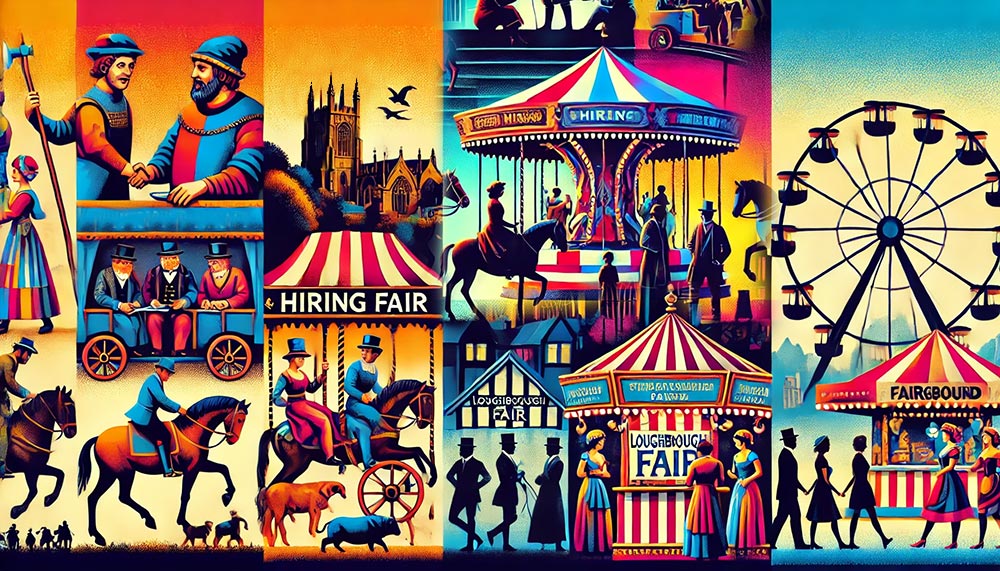
On the second weekend of November, the entire centre of our hometown, Loughborough, is subsumed by the annual fair. It began in 1221 as a livestock and trade fair, and it has been held every year since, except during the two world wars and in 2020 due to COVID.
Coming just after Bonfire Night, the shorter days signal the approaching end of the year. It’s a highly anticipated event for locals and the final big fair of the year on the circuit: three and a half days of flashing lights, pumping pop songs, and the smell of diesel generators.
A Familiar Face in the Crowd
Growing up in a town of around 40,000 in the ’70s, it was easy to go years without seeing people you had gone to school with or worked alongside. However, if you stood in one spot long enough on the Friday night of the fair, you’d likely see most of the people you’d ever known pass by.
Since we left England in 1981, our visits back have rarely coincided with the fair, as it’s too early for a Christmas visit and not the obvious time of year weather-wise. The last time we went to the fair was about 30 years ago, when we took our niece and nephew.
I was constantly scanning the crowd for familiar faces, but unfortunately, they all managed to avoid me.
I imagine a child today will have much the same experience as their grandparents did in their day. For more than a century, the annual extravaganza has been about rides like the Waltzers and the Big Wheel, with prices seemingly index-linked to cost three times what they’re worth, rising to five times when the pubs close on the final night.
No doubt some of the rides have become more extreme over the last three decades to capture the attention of the VR generation, but hopefully, the Waltzers are still in front of the Town Hall and the Carousel Horses still give the toddlers a thrill.
As well as the rides, all the fun of the fair includes the stalls: rigged games of skill to win gaudy stuffed toys, hook-a-duck for the kiddies and darts or the rifle range for the older punters.
Traditional fair fare includes candy floss and toffee apples for the sweet-toothed, while hot dogs, hamburgers, and mushy peas counter the November chills. Wetherspoons and the local chippies probably do a roaring trade, too.
A Trip Down the Time Tunnel
When steam-powered rides and attractions arrived en masse at the beginning of the 20th century, the town’s entire population probably went to take a gander at those modern marvels. Victorian-era freak shows still lingered on, and sadly, the rifle range served as practice for the looming ‘Great War’. Street carts sold hot roasted chestnuts, gingerbread, and toffee apples. Bucketloads of ale and porter were downed while kids waited outside the boozer with lemonade, ginger beer, or the new northern elixir, Vimto!
Brass bands and barrel organs provided a musical backing to steam engines and the general hubbub. The fair would have been, as it remains today, a sensory overload of sights, sounds, and smells.
Families, couples, and workers from surrounding areas would have gathered, enjoying a still-rare opportunity for leisure and to let off steam.
Back in 1721, when the fair celebrated its 500th anniversary—the same year Walpole became Britain’s first Prime Minister—the entertainment included hand-turned roundabouts, puppet shows, musical performances, and gambling: dice games, cards, and cockfighting. There were games of skill: archery contests, quoits, and skittles.
Plenty of ale, small beer and cider washed down meat pies filled with beef, pork, or game, sold as portable snacks. The fair would have been bustling and noisy, with the mingling smells of food, animals, and the occasional less pleasant odours of the time. It was both a place of commerce and a rare chance for entertainment and courtship. In those pre-Industrial Revolution days, the population was only 2,000 to 3,000, so the majority of the faces would have been familiar to most.
It also had a reputation for rowdiness: gambling losses, theft, occasional brawls, and intemperate behaviour of all kinds!
In medieval times, despite being a trade fair, there was plenty of fun to be had too. Traveling minstrels played the lute, harp, and hurdy-gurdy, sang ballads and told stories. Performers entertained crowds with juggling, tightrope walking, and tumbling acts. Magicians, puppeteers, and fire-eaters roamed the fair, while archery contests and wrestling matches drew competitors and spectators alike. Mystery plays were also performed. Sadly, bear-baiting likely attracted crowds as well.
Vittles included spit-roast meat, honey cakes, and candied fruit, while locally brewed ale and mead flowed freely.
In 1351, to regulate the workforce decimated by the plague, the fair became a Hiring Fair and remained so until the late 1800s.
The Generation Game
Most of us have little memory or knowledge of our eight great-grandparents, if we ever knew them, and none at all of our sixteen great-great-grandparents.
When we do the arithmetic—with thirty generations between the first Loughborough Fair and now—each of us would theoretically have 1,073,741,824 great (x28)-grandparents. The population of the town in 1221 was about 500 and the world population was only about 360 million at the time.
It becomes clear that our family trees are heavily entangled, root and branch, particularly as people generally didn’t stray too far from their birthplace for most of the next 800 years.
So, next time you’re watching the crowd pass you on the second weekend in November, don’t be too startled if you see faces that you can’t quite place but that look familiar.
As I’m still hoping to see the fair at least one more time, I might just see your familiar face in the crowd—unless you see me first!
Evocative read Andy xx
Thanks for taking the time to read it Mel! With Di, that makes three of us 🙂
You can make that four now Andy😆. Your blog made for incredible reading. As I know you and Di fairly well I felt your article gave me more insight into your earlier years growing up in Loughborough. What great memories. 😍
Thank you for reading Michelle, I´m glad you enjoyed it 😊